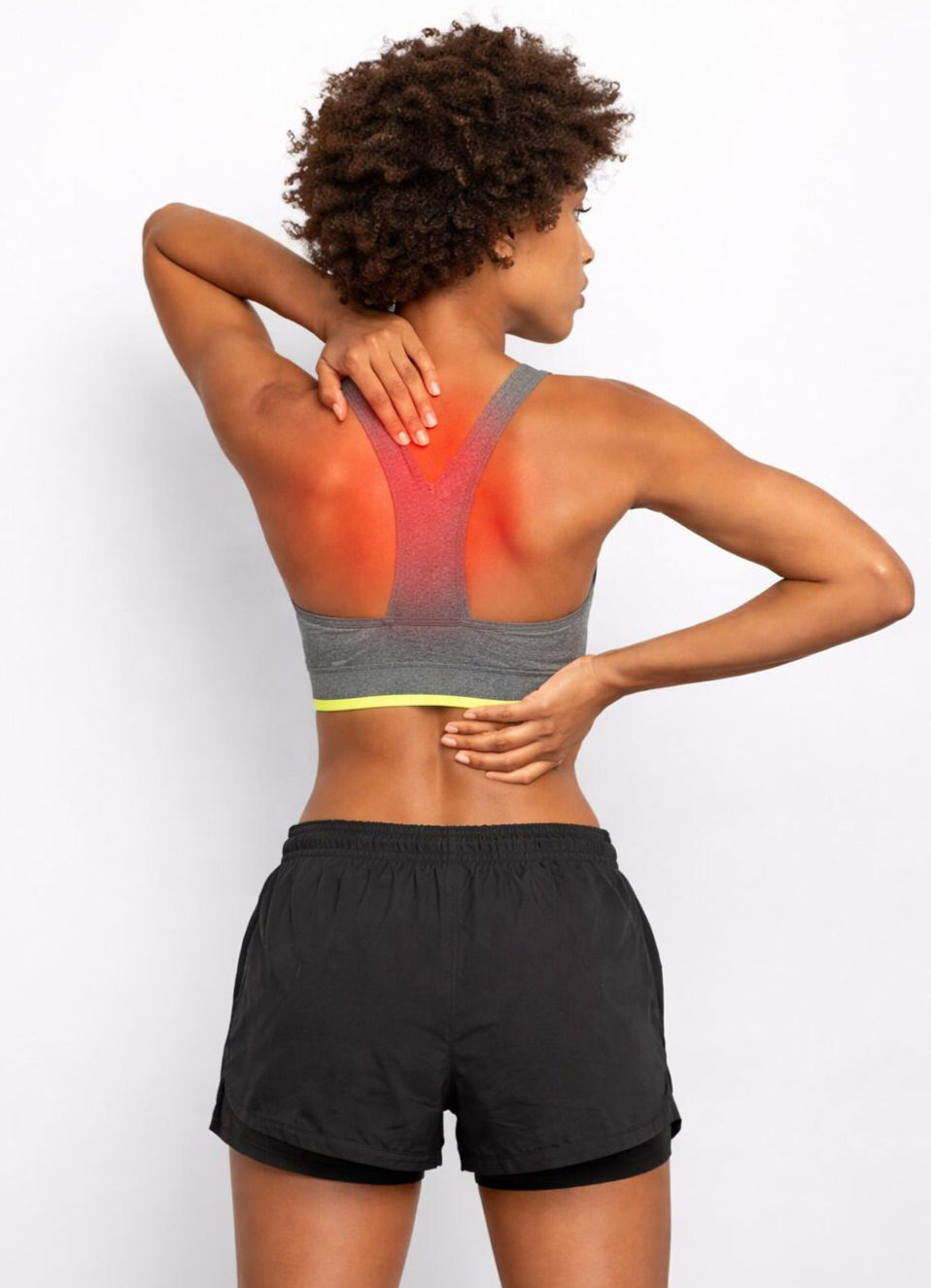
Why Does My Mid-Back Hurt?

Pain between the shoulder blades is one of the most common complaints I hear.
Most people think they pulled a muscle, slept in the wrong position, or simply spent too many hours sitting at a desk.
But what if I tell you that your mid-back is not actually the problem?
It may sound surprising, but in many cases the pain you feel is simply your body's way of telling you that something else is not working as it should.
Your Mid-Back May Be Innocent
The mid-back, or thoracic spine, sits between the neck and lower back and plays an important role in keeping your body balanced.
But it does not work alone. It woks within a unit.
Every time you stand, walk, reach or bend, your shoulders, rib cage, pelvis, hips, knees, ankles and feet all work together.
So what happens if just one of these areas stops doing its job?
Your body has only one choice, it adapts. Compensation is born.
Compensation: Your Body's Survival Strategy
Imagine trying to walk with one shoe that is too thick. You would not think about changing the way you walk, but your body would.
Without even realizing it, you would shift your weight, tilt your pelvis, rotate your spine and change the way your muscles work, the body does all that to keep you moving.
The same thing happens when your hips become stiff, your pelvis loses its natural position, or your feet no longer provide a stable foundation.
Your body is incredibly clever. It will always find another way to accomplish the movement.
The problem is that these compensations often place extra stress on areas that were never designed to do the extra work, and your mid-back is not any different.
Why Doesn't Stretching Solve It?
When pain develops between the shoulder blades, most people immediately stretch, massage or apply heat.
Sometimes that feels better.
But have you ever wondered why the pain keeps coming back?
If the real cause is somewhere else in the body, treating only the painful area is a little like fixing a crack in the ceiling without repairing the leaking roof.
The symptom may improve, but the cause remains.
Where Does It Really Begin?
This is where posture becomes so important.
Mid-back pain may actually begin with:
A pelvis that is no longer balanced
Hips that do not move as they should
Knees that no longer track properly
Ankles or feet that have lost mobility or stability
A rib cage that does not move well during breathing
Forward head posture or rounded shoulders
Each of these changes affects how forces travel through your body.
Over time, your mid-back may simply become the area that absorbs the extra workload.
Looking at the Whole Body
Instead of asking, "Where does it hurt?" I prefer you ask yourself, "Why is this area working so hard?"
Pain is rarely random.
More often, it is a clue that another part of the body needs attention.
When alignment is restored and the body begins working as one connected unit again, the unnecessary stress on the mid-back often decreases naturally.
Final Thoughts
Your body is remarkably intelligent.
It will always find a way to keep you moving, even if that means creating compensations along the way.
The key is not simply getting rid of the pain. It is discovering why the pain developed in the first place.
Because when you address the cause instead of just the symptom, that is when lasting change becomes possible.
How I Can Help
Finding the true cause of your pain begins with understanding how your entire body is moving, not just the area that hurts.
During a posture assessment, I take photographs of your body from the front, back, and both sides. Using specialized posture analysis software with alignment grids, I can identify imbalances and compensation patterns that may be contributing to your pain.
From there, I create a personalized posture therapy program designed specifically for your body. The gentle exercises are prescribed to help restore better alignment, reduce unnecessary compensation, and allow your body to move the way it was designed to.
When the body begins functioning as one connected unit again, pain often decreases naturally, not because the painful area was treated, but because the underlying cause was addressed.
Curious about what your posture is revealing? Contact me to schedule a posture assessment and take the first step toward moving with greater ease and less pain.